Showing posts with label house histories. Show all posts
Showing posts with label house histories. Show all posts
Tuesday, October 9, 2012
Consider Giving a Gift of History This Year
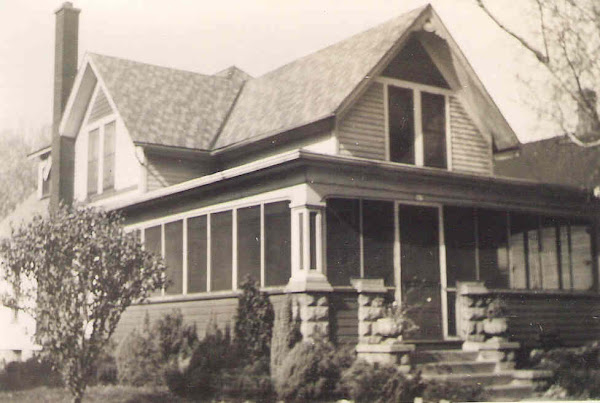
House histories and family histories make great gifts. These gifts are unique and very personal. I have completed many histories for gifts, and all have been well-received. If you are considering giving a gift of history this year, please plan ahead. Researching a house or a family takes time, so I set October 31 as my cutoff date for beginning Christmas gifts. Gift certificates are also available.


Friday, February 24, 2012
Reminders of the Past: The Fox Road Schoolhouse, Huron Township, Ohio

One-room schoolhouses dot the landscape of Ohio and provide a reminder of what life was like for the children of rural areas, including Huron Township, at the beginning of the 20th century. Sadly, only two of the more than eight, one-room schoolhouses that once stood in Huron Township remain.
As early as 1841, a schoolhouse stood on Fox Road just west of Camp Road in Huron Township. In September of 1841, Squire Barrett sold a small plot of land in the north part of Lot 9, Section 3 to Huron Township for school purposes. As the population of Huron Township grew, so did the number of children attending the rural schools. In the early 1860s, there was an average of 25 students attending the school on Fox Road, known as the Sub-district No. 8 School. Hence, a new and improved schoolhouse was needed to accommodate the growing number of students.
In 1868, the director of the Sub-district No. 8 School, George W. Harris, suggested that a new schoolhouse be constructed in his district just to the west of the original schoolhouse. Hence, in May of 1868, the Board of Education of Huron Township resolved that a tax would be levied on all of the property of Sub-district No. 8 in the amount of $500, and a tax would be levied on all the taxable property of the Township (village exempt) in the amount of $700 for the purpose of purchasing a lot, building a 24’ x 30’ brick schoolhouse, digging a well, and fencing the ground in Sub-district No. 8. By April of 1869, the new schoolhouse was well underway. Unfortunately, the $1,200 in taxes that was collected from the residents of Huron Township was not enough to complete the new schoolhouse. Therefore, the Board of Education levied another $900 tax. The new schoolhouse was likely ready for use by the fall of 1869.
In 1868, a vote was put to the people of Huron Township and Huron Village to decide whether or not to build a central high school. The voters in the township voted against the measure; however, the people of the village voted in favor of it. Though defeated in 1868, efforts to centralize the schools continued nonetheless. In 1886, Huron built a large school in the village on the corner of Williams and Shirley streets. The younger grades were composed primarily of students residing in the village, but high school students came from all over the township.
In the early 1900s, August Scheid was appointed director of the school in Sub-district No. 8. Mr. Scheid, who had several children in the district, was a strong proponent of centralized schools. In 1911, Mr. Scheid personally provided the means for children to be brought into the village for school by purchasing a bus to transport students from Sub-District No. 8 into Huron each day. Mrs. Scheid designed the bus, and it was manufactured in Sandusky. Further, the Scheid’s son, Lyndon, who was to attend Huron High School, would be the bus driver. Hence, the schoolhouse in Sub-district No. 8 was no longer in use after September of 1911. A few of the other one-room schoolhouses survived the centralization effort for a short time, but all eventually succumbed.
From 1911 until 1941, the schoolhouse in Sub-district No. 8 sat vacant, but was still under the ownership of the Huron Township Board of Education. During the 1930s, the owner of the land upon which the schoolhouse sat allowed their pigs to use the structure for shelter. The once lovely schoolhouse was now in shambles. In March of 1941, Thurman, Katherine, and Emory Fox purchased 196 acres of land, including Lot 9, from the People’s Loan and Savings Company. The People’s Loan and Savings Company had recovered the property in 1931 in a suit against August Scheid who owed them $47,535. The Fox family likely challenged the Board of Education of Huron Township for ownership of ‘the schoolhouse lot’ since the schoolhouse was obviously not in use as a school, and, therefore, the land upon which the schoolhouse sat was supposed to revert back to the land owner. In June of 1941, ‘the school house lot’, containing 0.65 acres, was subsequently sold to Dennis C. Fox. By the time Dennis Fox came into possession of the schoolhouse, all of the windows and doors were gone. Yet, Mr. Fox had a vision for the old schoolhouse which included rehabilitating it and making it his home. Since that time, many others have made improvements to the schoolhouse and have called it home, but yet have lovingly respected the house’s unique past.
NOTE: Historical Research Partners was hired in 2009 to research the history of this great schoolhouse, now a home.
Tuesday, January 24, 2012
John Munson Boalt- A Life of Tragedy and Triumph

John Munson Boalt was born in Norwalk, CT, in 1814. His family settled in Norwalk, OH, in 1816, and then moved to Sandusky, OH, in 1824 where his father opened the Steamboat Hotel. In 1826, John’s father died, and the family returned to Norwalk. At the age of 14, John was orphaned; yet, he was an industrious young man, and soon found employment in Sandusky in the grain and shipping industry.
In 1842, John married Sarah Follett. Sadly, Sarah died in 1844 during childbirth, and their infant son, Edward, died six months later. John served on Sandusky’s first two city councils in 1845 and 1846. Around 1850, he moved to Milwaukee, WI, and then to Winona, MN. John returned to Sandusky in 1866 as a wealthy man and ordered construction of a new home located at 631 Wayne Street. The grand, Italianate-style home took two years to complete. John heavily invested in the Sandusky Wheel Co., a large producer of carriage wheels, and was named president in 1867. Upon completion of his new home in 1868, John again married, taking for his bride Francis (Fannie) Griswold. Through this union, three children were born, two of whom died in infancy.
In 1872, a fire destroyed most of the buildings and finished stock of the Sandusky Wheel Co. Presumably, this is why John filed for bankruptcy in 1873. Though John legally reached an agreement to pay his creditors a portion of what he owed them, he eventually repaid them in full, plus interest. From 1876 to 1880, John served as Postmaster for Sandusky. John died on May 4, 1890, at home at the age of 76. Services were held at the family home. Fannie Boalt moved from her home shortly after John’s death and rented the house until 1898 when she sold it.
Monday, October 4, 2010
Plan Now For a Unique Christmas Gift
Over the past few years, I have completed house history and genealogy projects for clients to give as Christmas gifts. These gifts have always been received with great enthusiasm. If you are looking for a gift for the person with everything, consider giving that person a written history of their house/property or a written history of their family. This is a gift that endures the test of time. Due to the fact that compiling a house history or family history often takes several weeks to several months to complete, now is the time to get started! Go to www.historicalresearchpartners.com for more information.
Monday, September 27, 2010
Current/Recent Projects
Old Mill Road, Gates Mills, Ohio- This Greek Revival structure was built around 1900 by a family that owned the adjacent property. The family claimed the property under Squatter's Rights and built a house there. Likely, the house was used as a rental property for a number of years.
 McCormick School, Huron, Ohio- McCormick School was completed in 1943. This fully concrete school built in the Art Moderne-style was the first concrete school in Ohio. Since 1949, the auditorium at McCormick School has been the home of the Huron Playhouse, the longest, continuously running summer theatre in Ohio. Currently, I am completing the nomination for the National Register of Historic Places for this structure.
Williams Street, Huron, Ohio- In the early 1850's, Alexander Ledgard, a veteran of the War of 1812, built this house. In 1871, the house became the parsonage for the fledgling German Evangelical Church in Huron. The house was used in this capacity until 1904. For much of its history, the house was used as a rental property. Interesting, the current owner is a retired minister.
 McCormick School, Huron, Ohio- McCormick School was completed in 1943. This fully concrete school built in the Art Moderne-style was the first concrete school in Ohio. Since 1949, the auditorium at McCormick School has been the home of the Huron Playhouse, the longest, continuously running summer theatre in Ohio. Currently, I am completing the nomination for the National Register of Historic Places for this structure.
Williams Street, Huron, Ohio- In the early 1850's, Alexander Ledgard, a veteran of the War of 1812, built this house. In 1871, the house became the parsonage for the fledgling German Evangelical Church in Huron. The house was used in this capacity until 1904. For much of its history, the house was used as a rental property. Interesting, the current owner is a retired minister.
Friday, May 21, 2010
Researching the History of Your House
I will giving a program at the Gates Mills Branch of the Cuyahoga County Public Library on Wednesday, June 2 at 7 PM. In the program, I will detail how to go about researching the history of your home in Cuyahoga County, Ohio. Registration for the program is requested at http://cuyahogalibrary.org/EventDetail.aspx?EventInstanceID=40694.
Monday, March 8, 2010
Huron, Ohio History Articles
Here are links to articles that I wrote that recently appeared in the Huron Hometown News Paper. The first one is on a former one-room schoolhouse that I researched- http://huronhometownnews.com/school-news/2044--reminders-of-the-past-the-fox-road-schoolhouse. The second is on Huron shipbuilder John F. Squier (aka John F. Squires)- http://huronhometownnews.com/news/local-news/2095-portraits-of-hurons-past-john-f-squier. I hope you enjoy reading these articles!
Wednesday, March 3, 2010
Greetings from snowy Ohio. This is a blog about embracing the history around you and embracing your own history. Many people who live in an old house have questions about the history of their home and especially about what the proverbial 'they' were thinking when 'they' did something to the house that has no apparent explanation.
My husband and I live in a circa 1883 Folk Victorian house that we purchased in
1998. I was delighted to find out that our house was built for a run-away wife- quite the rebel for 1883. Myra Thomas was married to a widower who was 29-years her senior. Apparently, Myra was not happily married because she left her husband and built our house. In 1887, her husband was granted a divorce from her on the grounds of her "willful absence for three years." The subsequent owners were also interesting.
It is also rewarding to know who your ancestors are. I am of Sicilian and Slovak decent. I have yet to dig too deep into my own history, but have gotten to know many people that I have researched for others. I would be happy to hear other's stories.
In this blog, I will share information on houses and people that I have researched. The majority of these people resided in northern Ohio. I hope you enjoy the stories I have to tell.
My husband and I live in a circa 1883 Folk Victorian house that we purchased in
1998. I was delighted to find out that our house was built for a run-away wife- quite the rebel for 1883. Myra Thomas was married to a widower who was 29-years her senior. Apparently, Myra was not happily married because she left her husband and built our house. In 1887, her husband was granted a divorce from her on the grounds of her "willful absence for three years." The subsequent owners were also interesting.
It is also rewarding to know who your ancestors are. I am of Sicilian and Slovak decent. I have yet to dig too deep into my own history, but have gotten to know many people that I have researched for others. I would be happy to hear other's stories.
In this blog, I will share information on houses and people that I have researched. The majority of these people resided in northern Ohio. I hope you enjoy the stories I have to tell.
Subscribe to:
Posts (Atom)